Singapore Accounting Services

We deliver tailored solutions designed to streamline and enhance your experience with professional accounting services.

Singapore Accounting Services2026-11-17T14:02:04+08:00

In short: Singapore companies must keep proper accounting records for 5 years and prepare annual financial statements for their AGM, annual return and tax filing. Outsourced accounting services in Singapore cover the bookkeeping, statements and compliance work so owners can meet those duties without hiring a full in-house team. Paul Hype Page’s accounting service starts at S$1,200; corporate tax filing is charged separately (see our guide to the corporate tax filing deadline so you file on time). It suits foreign owners who need the work done locally by an ACRA-registered public accounting firm.

Since 2008 · ACRA-registered public accounting firm · 30 Petain Road, Singapore 208099

As one of Singapore’s leading accounting firms, we offer expert financial services tailored to support businesses after incorporation. These services are essential for maintaining accurate records and meeting local compliance requirements.
While registering your company is the first step, ensuring a seamless process for payroll, audits, and bookkeeping is equally important. Moreover, consistent financial reporting builds trust with partners and attracts top talent.
In addition, proper accounting practices help ensure full adherence to local business laws—reducing risk and promoting sustainable growth.

Related Read: Tax Residency in Singapore

Singapore Accounting Services

Outsourcing your accounting needs to Paul Hype Page & Co. helps streamline essential but time-consuming functions such as payroll, auditing, bookkeeping, and financial reporting. As a result, businesses can concentrate on strategic growth and operations.
In addition, leveraging professional expertise leads to more accurate budgeting, timely payroll management, and effective debt handling. This not only improves cash flow but also offers deeper insight into the profitability of individual product lines—supporting better decisions for future expansion.

The Core Elements of Accounting and Finance Services in Singapore
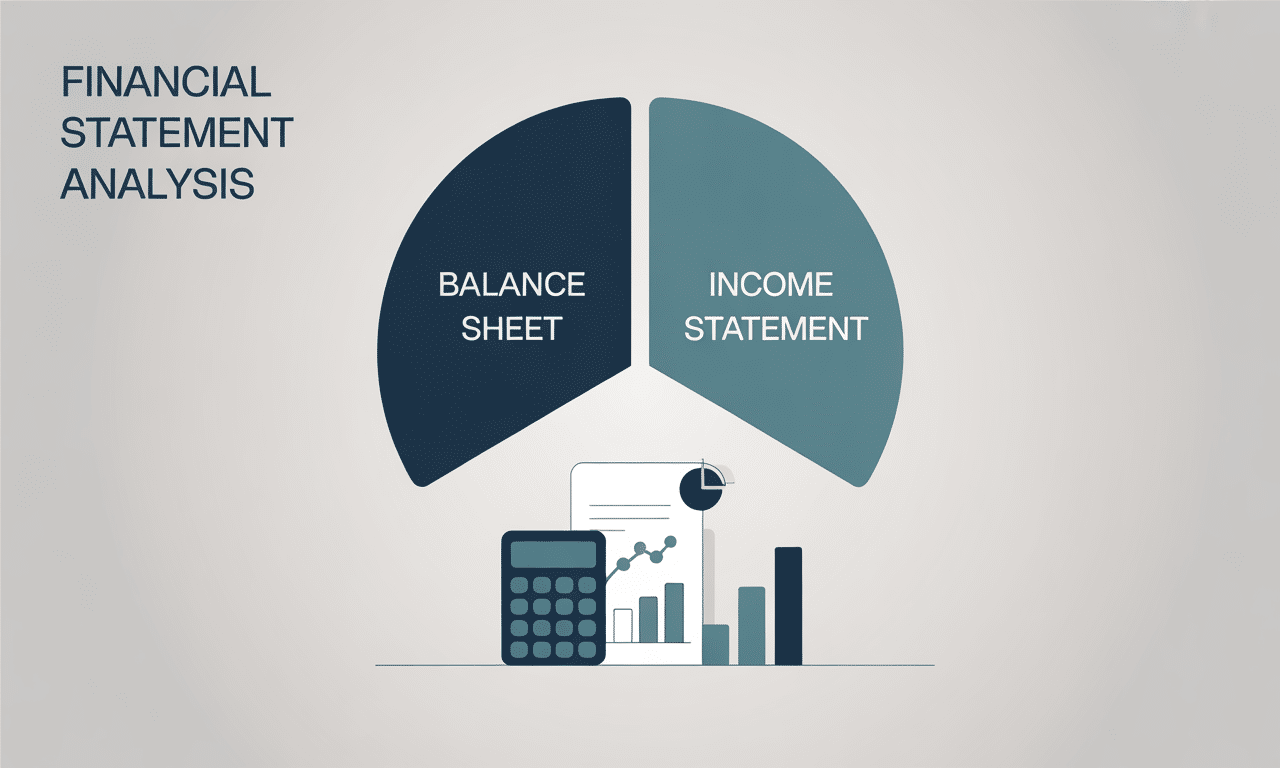
Financial Statements

Accurate and timely financial reporting is essential for businesses in Singapore to remain compliant and competitive. Key components of professional accounting services include the preparation and analysis of financial statements, such as the balance sheet and income statement. These reports help stakeholders assess the company’s performance, profitability, and financial stability.

Financial statements also play a critical role in tax compliance, funding applications, and investor reporting—making them indispensable to companies operating in Singapore’s regulated business environment.

What Does Accounting Include?

  • Cash flow and working capital analysis
  • Account consolidation and preparation of financial statements
  • Management accounts and performance reporting
  • Financial planning and budgeting support
  • XBRL filing for annual return submissions
  • Payroll and tax reporting compliance
  • Advisory services for strategic financial decisions
  • GST filing in accordance with IRAS guidelines

Boosting Business Efficiency with Outsourced Accounting Services in Singapore

Outsourced accounting services in Singapore let a company hand bookkeeping, year-end financial statements and ongoing ACRA and IRAS compliance to a professional firm, instead of building a full in-house finance team. That is especially useful for foreign-owned SMEs and founder-led companies that need the work done locally, in English, to Singapore standards.

The directors still have to keep proper accounting records and present true and fair financial statements. Outsourcing does not pass that legal duty to the firm. What it does is give you a repeatable monthly close, statements ready for the annual return and tax filing, and a local team that can raise issues early.

Paul Hype Page & Co is an ACRA-registered public accounting firm as well as a corporate service provider. We prepare the books and statements, and can run payroll and corporate tax filing alongside them. We are a multi-jurisdiction CSP with offices across Asia, including Japan and China, and in Australia, and we do hands-on implementation rather than advice alone. Accounting starts at S$1,200 a year; corporate tax filing is charged separately.

Three common misconceptions about accounting services

Misconception 1: Accounting is the same as bookkeeping. Bookkeeping is the day-to-day recording of transactions. Accounting services go further: they produce the financial statements, support ACRA and IRAS filings, and help you read the figures. A company usually needs both. See also the section below on the differences between accounting and bookkeeping.

Misconception 2: You only need an accountant at year end. Records have to be kept throughout the year, and filing deadlines (ECI, the annual return and the tax return) are easier to meet when the books are closed each month. Leaving everything to the last month is how errors and late filings happen.

Misconception 3: Outsourcing means losing control, or is only for large companies. You should still receive management reports and stay able to ask questions about your own figures. Outsourced accounting is often a better fit for smaller and foreign-owned companies than hiring a full finance team. You remain in control of decisions; the firm maintains the records and the filings with you.

Filing Deadlines in Singapore

Your company’s financial activity must be reported in accordance with the Financial Reporting Standards of Singapore. This includes preparing accurate financial statements annually.
To remain compliant and avoid penalties, make sure you’re aware of the critical filing dates throughout your financial year.

Financial Year End (FYE)

The Financial Year End (FYE) marks the end of your company’s accounting period and sets the timeline for submitting annual reports. Companies have the flexibility to choose this date based on their internal preferences.
Following your FYE, you must file your Estimated Chargeable Income (ECI) within three months. This submission reflects your taxable income after deducting tax-allowable expenses, as required by IRAS.

Estimated Chargeable Income (ECI)

ECI must be filed within three months after the company’s Financial Year End (FYE). It reflects the taxable income after deducting all tax-allowable business expenses.
Filing on time ensures compliance with IRAS requirements and helps avoid unnecessary penalties

Annual Tax Return

All companies in Singapore must file their annual tax return with the Inland Revenue Authority of Singapore (IRAS) by November 30 each year.
Singapore uses a preceding year basis for taxation. This means the tax return filed in the current year is based on profits earned during the financial year that ended the year before.

Our Singapore Accounting Services

We provide comprehensive accounting solutions that ensure accurate financial reporting and full compliance with statutory requirements in Singapore.
Our services cover day-to-day bookkeeping, preparation of financial statements, and strategic advice aimed at improving your business’s financial health and long-term performance.

Bookkeeping and Financial Reporting

  • Accurate record-keeping to ensure up-to-date financial data for informed decision-making.
  • Preparation of financial statements in compliance with Singapore Financial Reporting Standards (SFRS).
  • Monthly management reports to track business performance and cash flow.
  • Customized reporting templates tailored to business-specific requirements.
  • Year-end adjustments and reconciliations for a smooth financial year closure.

Payroll and Employee Compensation Management

  • Accurate payroll processing to ensure compliance with statutory regulations.
  • CPF and tax calculations for seamless submissions to relevant authorities.
  • Preparation of employee payslips in accordance with MOM guidelines.
  • Leave management and benefits tracking integrated with payroll systems.
  • Annual IR8A submissions for employee income reporting.

Corporate Tax Planning and Compliance

  • Tax filing and registration with the Inland Revenue Authority of Singapore (IRAS).
  • Tax-efficient strategies to minimize corporate tax liabilities.
  • GST registration and reporting to ensure accurate compliance.
  • Advisory on tax exemptions and incentives under Singapore’s tax schemes.
  • Representation during IRAS audits or inquiries for smooth resolution.

Business Advisory and Financial Analysis

  • Budgeting and forecasting services for financial planning.
  • Cost and revenue analysis to identify growth opportunities.
  • Cash flow management strategies to maintain business liquidity.
  • KPI tracking and performance reviews to align with business goals.
  • Insights on business restructuring or expansion based on financial data.

Audit Support and Compliance

  • Preparation of audit-ready financial documents to save time and ensure accuracy.
  • Internal audit reviews to identify and rectify discrepancies.
  • Compliance with statutory regulations and SFRS requirements.
  • Advisory on improving internal controls to reduce financial risks.
  • Assistance with external audit processes for a hassle-free experience.
Need more information on our services? today!

Differences Between Accounting & Bookkeeping

Many small business owners—especially those without a finance background—often confuse outsourced accounting with bookkeeping. While both are essential, they serve different functions in managing a business’s finances.
To clarify the distinction, here’s a simple comparison:

Accounting Bookkeeping
Used for business and financial analysis to support decision-making Focuses on recording all financial transactions
Follows from bookkeeping to produce reports and statements Serves as the starting point for financial analysis using raw data (e.g. receipts, invoices)
Requires deeper financial knowledge and interpretation of figures Emphasizes organization of records with a basic understanding of reporting standards

In short, bookkeeping lays the groundwork, while accounting provides insight and direction for business growth.

Our 2 Decades of Proven Expertise Will Guide Your Business

With over 20 years of experience across Singapore, Malaysia, Indonesia, and Hong Kong, we’ve successfully incorporated more than 2,000 companies in various jurisdictions.
In Singapore, our high success rate in securing work passes and handling complex regulations reflects our commitment to client success
As trusted advisors, we use strategic networks and market insights to streamline the Singapore company registration process—helping businesses build a strong foundation in a competitive environment.

Start Your Accounting via
WhatsApp
or
Request a Quote
with our consultant today!

Frequently Asked Questions

We’ve picked the top questions that we get asked the most when it comes to accounting services in Singapore.

How long must I keep accounting records?2026-11-17T13:05:59+08:00

IRAS requires companies to keep source documents, accounting records, schedules, bank statements and other records of business transactions for at least five years from the relevant Year of Assessment. ACRA also requires companies to keep accounting records for at least five years after the end of the financial year in which the transactions or operations were completed. Keep records for the longer of those two periods. Directors remain responsible for proper records even if bookkeeping is outsourced.

Sources: IRAS: Record Keeping Requirements and ACRA: company directors’ duties.

Does my small company need an audit?2026-11-17T13:06:15+08:00

Not automatically. Under ACRA’s small company concept, a private company is audit-exempt if it meets at least two of these three tests for the immediate past two consecutive financial years: total annual revenue of S$10 million or less, total assets of S$10 million or less, and 50 or fewer full-time employees at the financial year end. A newly incorporated company (less than two years old) may qualify if it meets the tests in the current financial year. If the company is part of a group, the company itself must qualify and the entire group, including foreign entities, must also meet at least two of the same tests on a consolidated basis. A dormant company may have a separate audit exemption under the Companies Act. See our Singapore audit requirements guide. Paul Hype Page, an ACRA-registered public accounting firm, can review which test applies to your company.

Source: ACRA: audit exemptions — small company concept (last updated 3 February 2026).

Does the S$1,200 include corporate tax filing?2026-11-17T13:06:30+08:00

No. Paul Hype Page’s accounting service starts at S$1,200 a year and covers the bookkeeping and financial-statement work described on this page. Corporate income tax filing (Form C-S, Form C-S (Lite) or Form C, and Estimated Chargeable Income) is charged separately. Paul Hype Page is an ACRA-registered public accounting firm, so the tax filing can be added when you need it.

Do I need XBRL financial statements?2026-11-17T13:06:57+08:00

It depends on the company type. All Singapore-incorporated companies must prepare financial statements, except certain dormant relevant companies, and must file them with ACRA unless they are exempt. A solvent exempt private company (fewer than 20 members and no corporate beneficial interest in its shares, or a gazetted government-owned private company) does not have to file financial statements, though it may file voluntarily. If financial statements must be filed, smaller and non-publicly accountable companies file Simplified XBRL plus a PDF copy authorised by the directors; most other companies file Full XBRL. Audit exemption does not change the filing format. Paul Hype Page can prepare the required XBRL filing with the annual return.

Source: ACRA: financial statements filing requirements and exemptions (last updated 20 October 2026).

What financial year end should I choose?2026-11-17T13:07:07+08:00

You can choose any date as the company’s financial year end at incorporation. Common dates are 31 March, 30 June, 30 September and 31 December. Choose carefully, because the date determines your annual general meeting due date, ACRA annual return deadline and tax filing dates. If you later change the financial year end, you must notify ACRA. ACRA’s approval is needed if the new financial year would be longer than 18 months, or if you already changed the financial year end on or after 31 August 2018 and want to change it again within five years.

Source: ACRA: choosing a company’s financial year end (last updated 29 January 2026).

What do accounting services in Singapore include?2026-11-16T16:04:17+08:00

Typically bookkeeping, year-end financial statements, and the accounting work needed for the annual return and tax filings. Payroll and corporate tax filing can be added. Paul Hype Page’s accounting service starts at S$1,200 a year; corporate tax filing is charged separately.

What is the difference between bookkeeping and accounting?2026-11-16T16:04:17+08:00

Bookkeeping is the regular recording of income, expenses, invoices and bank transactions. Accounting uses those records to prepare financial statements and support ACRA and IRAS compliance. Most Singapore companies need both.

What is outsourced accounting in Singapore?2026-11-16T16:04:39+08:00

It means a professional firm keeps your books and prepares your statements, instead of an in-house finance team. The directors remain responsible for proper records. Outsourcing is common for SMEs and foreign-owned companies that want local compliance without hiring a full team.

What are the typical accounting services?2024-09-09T14:59:21+08:00

The typical accounting services include account consolidation, preparing of financial statements, tax filing, audit, and advisory services.

Is a professional accountant necessary for businesses?2022-06-27T15:03:47+08:00

It is highly encouraged for every business to have a professional accountant to comply with the annual compliance and avoid penalties.

What is XBRL?2022-06-27T15:03:27+08:00

eXtensible Business Reporting Language (XBRL) is a language for e-communication for business and financial data. It provides major benefits in the analysis and communication of business information, and offers cost savings, greater efficiency, and improved accuracy and reliability to all those involved in using financial data.

What should I look for when hiring an accountant or accounting firm in Singapore?2022-06-27T15:03:08+08:00

It is important to know if they are chartered or certified. Hiring and engaging an accounting firm that has relevant experience in your field will definitely be a plus. You should also consider engaging a local accounting firm, so they are updated with the latest regulations.

How should SMEs owners choose the right accountant?2021-09-20T13:40:59+08:00

When choosing an accountant, SMEs’ owners should ensure the candidate is a certified or chartered accountant. Of course, hiring an accountant with relevant experience in the business field will be a plus. 

Do SMEs need to hire a professional accountant?2021-09-20T13:40:27+08:00

It depends on the owner’s background and expertise. If an SME business owner has no clue where to start and the basic accounting knowledge, it is best to hire one to make sure the company is complying with the annual compliance.

How do SMEs owners evaluate if they should hire a professional accountant for their business?2021-09-20T13:39:44+08:00

SMEs owners should consider hiring a professional accountant for their business if they are not familiar with Singapore’s corporate tax regulations, requirements, and tax laws.

Where can I hire a reliable professional accountant?2023-08-24T13:31:39+08:00

You can hire a reliable professional accountant for your company from Paul Hype Page. We are the leading and trusted accounting service provider in Singapore.

How do I evaluate if I should hire a professional accountant for my business?2021-01-19T10:04:50+08:00

You should consider hiring a professional accountant for your business if you are not familiar with Singapore’s corporate tax regulations, requirements, and tax laws. It is also a sign to hire a professional accountant for your business if you are not sure when to register GST (Goods and Services Tax).

How should one choose the right accountant?2021-01-19T10:04:35+08:00

When choosing an accountant, you should ensure the candidate is a certified or chartered accountant. Of course, hiring an accountant with relevant experience in the business field will be a plus.

Why must financial reporting be done by an independent third-party accounting firm?2026-11-13T13:56:31+08:00

It does not have to be. In Singapore, the company’s directors remain responsible for the financial statements, whether the books are prepared in-house or by an outsourced accounting firm.

An external accountant can help keep proper records and prepare the statements, but financial reporting itself is not legally required to be done by an independent third-party firm. What must be independent, when a statutory audit is required, is the auditor — a public accountant or approved accounting firm that is not involved in preparing the accounts they audit.

Many private companies are exempt from statutory audit for a financial year if they qualify as a small company under the Companies Act: generally, a private company that meets at least two of these three criteria for the immediate past two consecutive financial years — total annual revenue of not more than S$10 million, total assets of not more than S$10 million, and not more than 50 employees. A company that is part of a group must also meet the small group tests. Newly incorporated companies are assessed on their current financial year.

Can Foreign Accountants work for Singapore companies?2020-06-22T12:31:27+08:00

There are no restrictions placed on foreign accountants in Singapore. Any accountant who has obtained the necessary qualifications and work permits (if the accountant is a foreigner) may work for a Singapore company. 

Why must Financial reporting be done by an independent third-party accounting firm?2026-11-13T13:57:02+08:00

It does not have to be. In Singapore, the company’s directors remain responsible for the financial statements, whether the books are prepared in-house or by an outsourced accounting firm.

An external accountant can help keep proper records and prepare the statements, but financial reporting itself is not legally required to be done by an independent third-party firm. What must be independent, when a statutory audit is required, is the auditor — a public accountant or approved accounting firm that is not involved in preparing the accounts they audit.

Many private companies are exempt from statutory audit for a financial year if they qualify as a small company under the Companies Act: generally, a private company that meets at least two of these three criteria for the immediate past two consecutive financial years — total annual revenue of not more than S$10 million, total assets of not more than S$10 million, and not more than 50 employees. A company that is part of a group must also meet the small group tests. Newly incorporated companies are assessed on their current financial year.

What is an implementation roadmap?2020-06-22T12:30:36+08:00

An implementation roadmap is a business strategy which details a specific plan. This plan is intended to help a business attain its corporate objectives. Most businesses would benefit from having a well-crafted implementation roadmap. 

Have more questions? today!

Our Singapore Accounting Guides

Learn more about the Singapore accounting landscape and beyond to understand more about the regulatory compliance needed.


Quick answers founders ask about Singapore accounting

What accounting does a Singapore company need? Keep proper records for at least 5 years, prepare yearly financial statements, and meet ACRA and IRAS filing duties. Accounting starts from S$1,200 a year — ask for a quote. Corporate tax filing is charged separately.

Still incorporating? See Singapore company registration, then appoint a company secretary for S$600 a year within 6 months of incorporation.

Need payroll too? We can run monthly payroll alongside your books — ask us when you request an accounting quote.


Go to Top