Singapore Legal & Company Secretary Guides





Guides

This guide provides a concise overview of the regulations concerning company shares and shareholders in Singapore, covering share capital requirements, types of shares, shareholder responsibilities and rights, share issuance, and transfer procedures.

Learn how to register a trademark in Singapore with IPOS, including how classes of goods and services work, how long registration lasts, and the usual application steps.

An EGM is a members’ meeting other than the AGM. Directors or qualifying members may call it. Notice is at least 14 days, or 21 days for a public-company special resolution, unless the Act allows shorter notice.
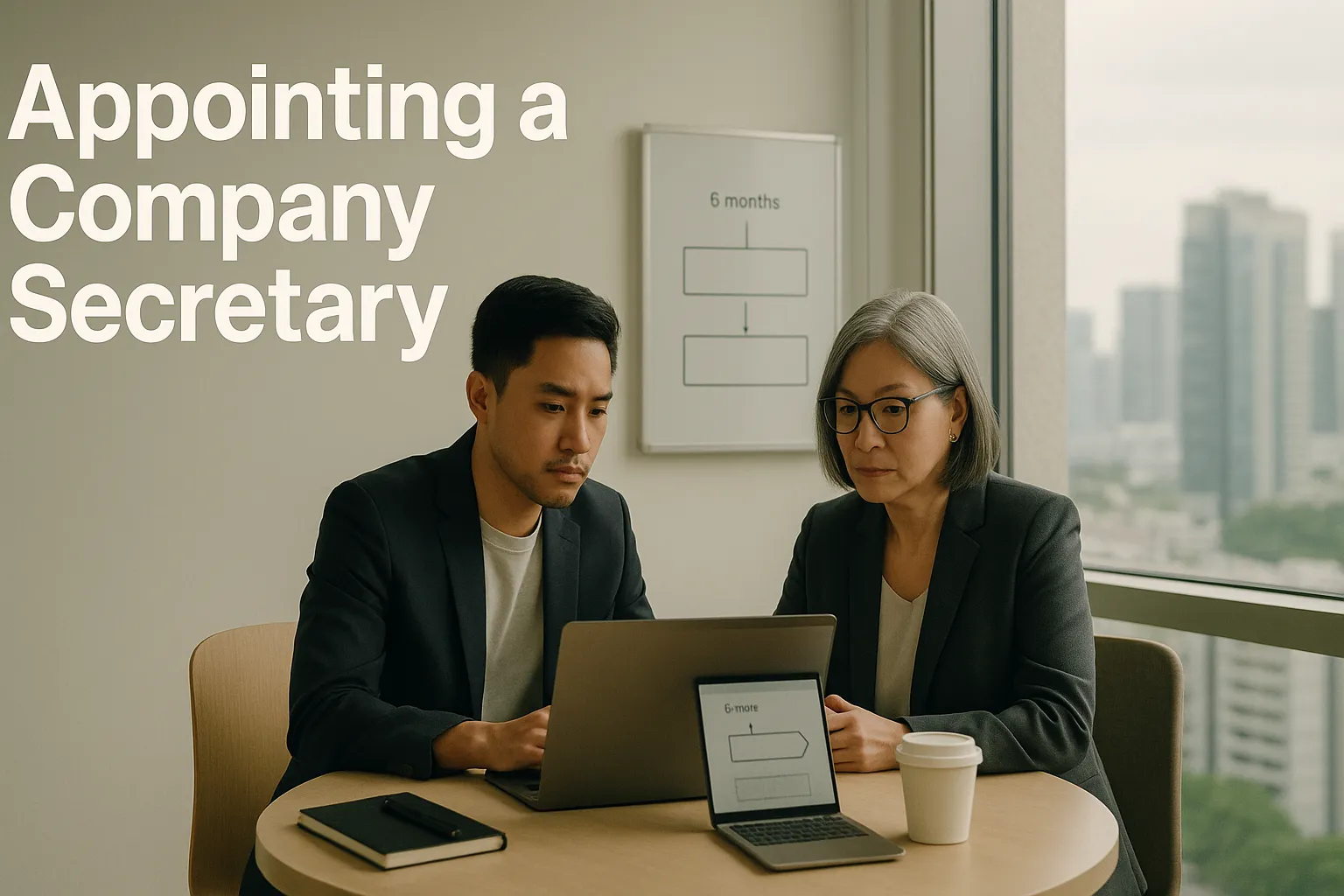
Many founders miss the 6-month deadline to appoint a Singapore company secretary or accidentally create a vacancy during a handover, which can lead to avoidable ACRA issues. This guide explains the key deadlines, who is eligible (and who is not), the sole-director restriction, and simple operating controls to keep filings and records in sync as the business changes.

The Monetary Authority of Singapore (MAS) has introduced comprehensive updates to its AML/CFT framework, tightening compliance standards across financial institutions and Corporate Service Providers (CSPs). These reforms aim to strengthen transparency, accountability, and risk management — reinforcing Singapore’s position as a trusted global financial hub.
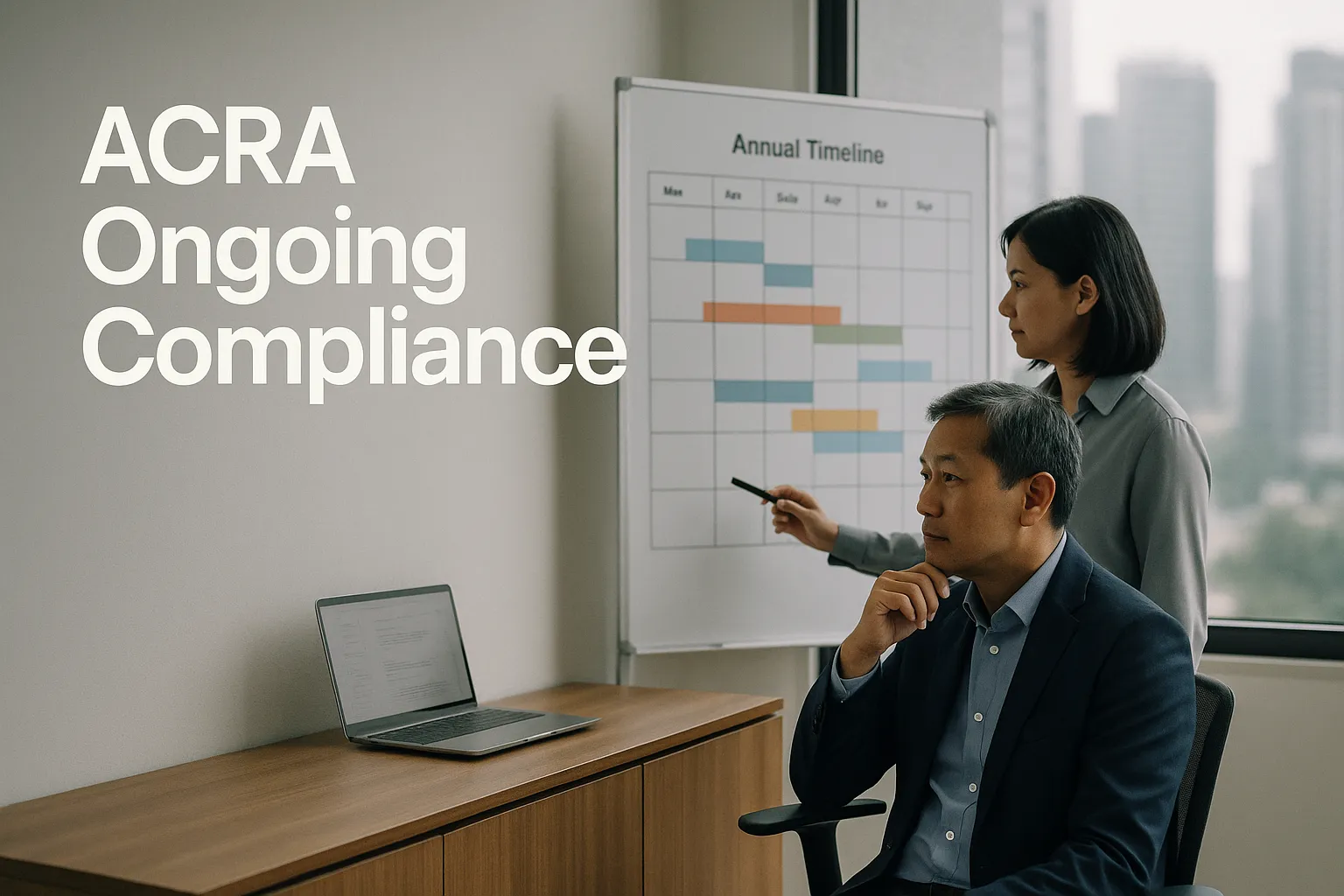
ACRA compliance often breaks down when year-end tasks depend on memory and handoffs between finance, directors, and the corporate secretary. This guide turns the core obligations—records, financial statements, AGM pathways, annual return filing, and event-driven updates—into a repeatable annual workflow with clear owners and checkpoints.
Directors in Singapore are responsible for ensuring proper accounting records, true-and-fair financial statements, and timely presentation and ACRA lodgement—even when finance work is outsourced. This guide translates the Companies Act expectations into a practical, end-to-end control and review process you can implement and document.

Retrenchment risk in Singapore often comes from execution gaps—unclear approvals, inconsistent selection criteria, and payroll miscalculations that don’t reconcile to accounting. This guide outlines a MOM-consistent workflow with sequencing, core documentation, final-pay controls (notice pay, leave encashment, CPF where applicable), and an audit-ready evidence pack.

XBRL filing is an Annual Return execution issue: you need to confirm whether ACRA expects your company’s financial statements to be lodged in full XBRL, a simplified XBRL template, or under an exemption. This guide outlines a practical workflow to choose the right ACRA-prescribed template, map and validate efficiently, and reduce rejection risk before submission.
Singapore Company Secretary Video Guides

All About Opening Company Bank Account in Singapore
Company Secretarial Services Singapore