



指南

Singapore’s rising business closures signal tougher selection pressure on weak unit economics, slow iteration, and fixed-cost-heavy models. This guide offers a 2027 founder framework to choose survivable sectors and business models, set unit economics and cash discipline gates, and run a test-and-scale cadence without locking in premature rent or headcount.
If your Singapore company cannot fully comply with a specific accounting standard due to exceptional, impracticable circumstances, you may be able to apply to ACRA for financial reporting relief under section 202 of the Companies Act. This guide walks through triage, evidence and governance sign-offs, auditor coordination, and a practical submission workflow for ACRA’s portal.
Directors in Singapore are responsible for ensuring proper accounting records, true-and-fair financial statements, and timely presentation and ACRA lodgement—even when finance work is outsourced. This guide translates the Companies Act expectations into a practical, end-to-end control and review process you can implement and document.
Singapore private companies generally need an annual audit unless a clear exemption applies, such as the small company, small group, or (in narrower cases) dormant company pathway. This guide gives directors a practical yes/no framework and explains what you still must prepare, plus what to verify with ACRA before skipping an audit.
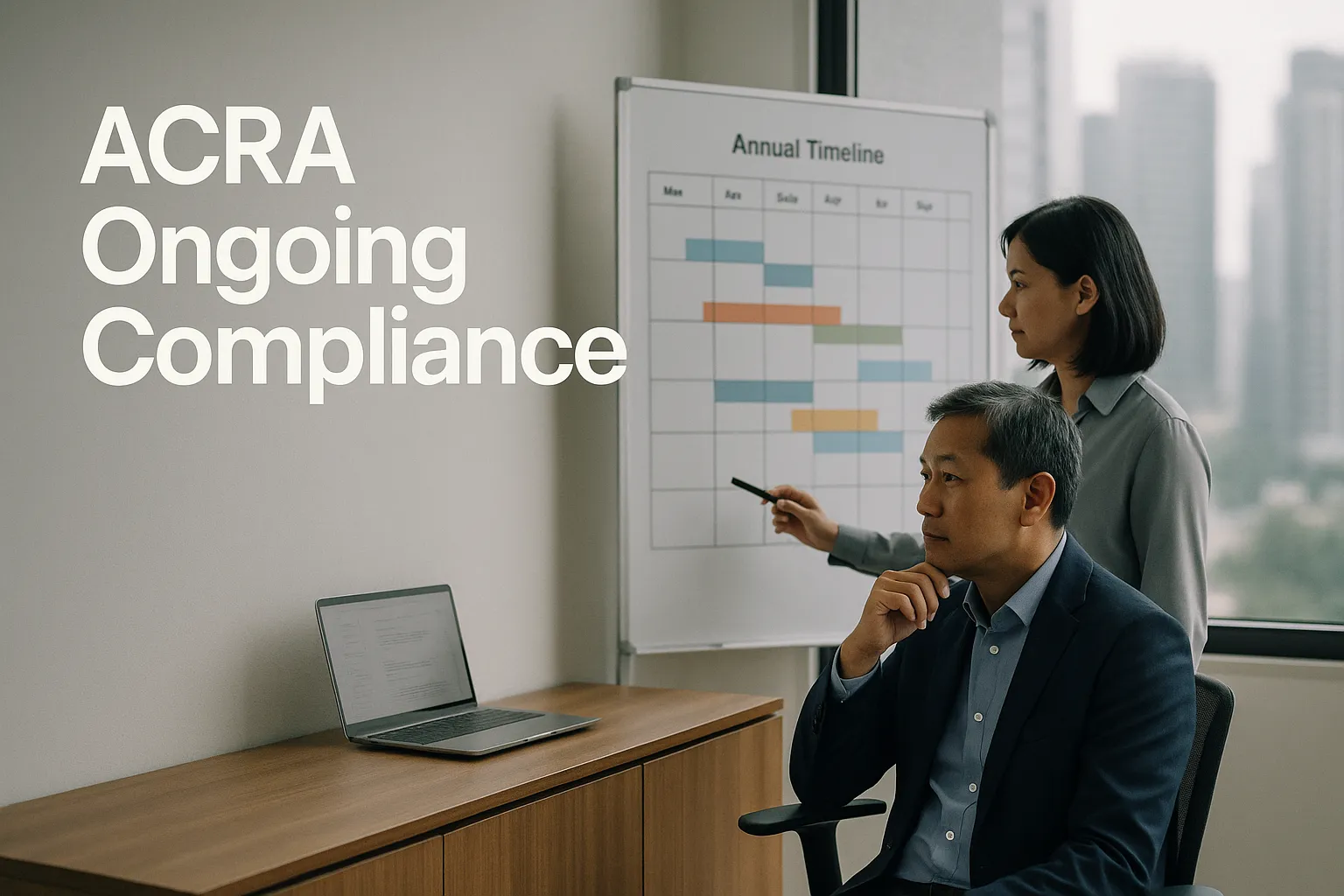
ACRA compliance often breaks down when year-end tasks depend on memory and handoffs between finance, directors, and the corporate secretary. This guide turns the core obligations—records, financial statements, AGM pathways, annual return filing, and event-driven updates—into a repeatable annual workflow with clear owners and checkpoints.

Many Singapore companies file late because the annual return due date depends on how the AGM is handled, the financial year end, and the company’s type. This guide shows how to map the correct deadline, prepare what BizFile needs, assign ownership, and recover quickly if you’re already overdue.

Many founders miss the 6-month deadline to appoint a Singapore company secretary or accidentally create a vacancy during a handover, which can lead to avoidable ACRA issues. This guide explains the key deadlines, who is eligible (and who is not), the sole-director restriction, and simple operating controls to keep filings and records in sync as the business changes.

Hard-sell sales systems can turn “closed revenue” into refunds, disputes, and reputational drag—especially in Singapore’s small, fast-moving market. This guide gives founders a practical control framework across scripts, informed consent evidence, package design, incentives, and complaint dashboards to reduce future liability without slowing growth.
MAS宏观经济评论2026显示适度增长,但波动性风险加大——因此中小企业应以区间而非单一预测进行规划。利用它来优化现金流管理,加强会计和税务文档,合规管理薪资成本,并为2026年至2027年的市场扩张进行结构化规划。
新加坡公司秘书视频指南

关于在新加坡开立公司银行账户的一切
新加坡公司秘书服务