Outline
- Why do “trust-heavy” categories in Singapore still reward the most transparent operator, not the oldest one?
- What’s the real commercial mechanism—how does transparency turn into distribution and conversion?
- How should you design pricing transparency without accidentally commoditising yourself?
- What customer education content actually moves revenue in high-ticket Singapore categories?
- How do you design an online-to-offline (O2O) journey that closes high-value deals without feeling pushy?
- Which trust signals scale in Singapore without implying “regulation guarantees quality”?
- What internal controls do you need when transparency increases volume and speed?
- How do you train staff to deliver transparency consistently—without turning them into robots?
- How can you apply this playbook beyond bullion—especially in other opaque Singapore industries?
- Conclusion
- Turn transparency into a repeatable operating system
- FAQs
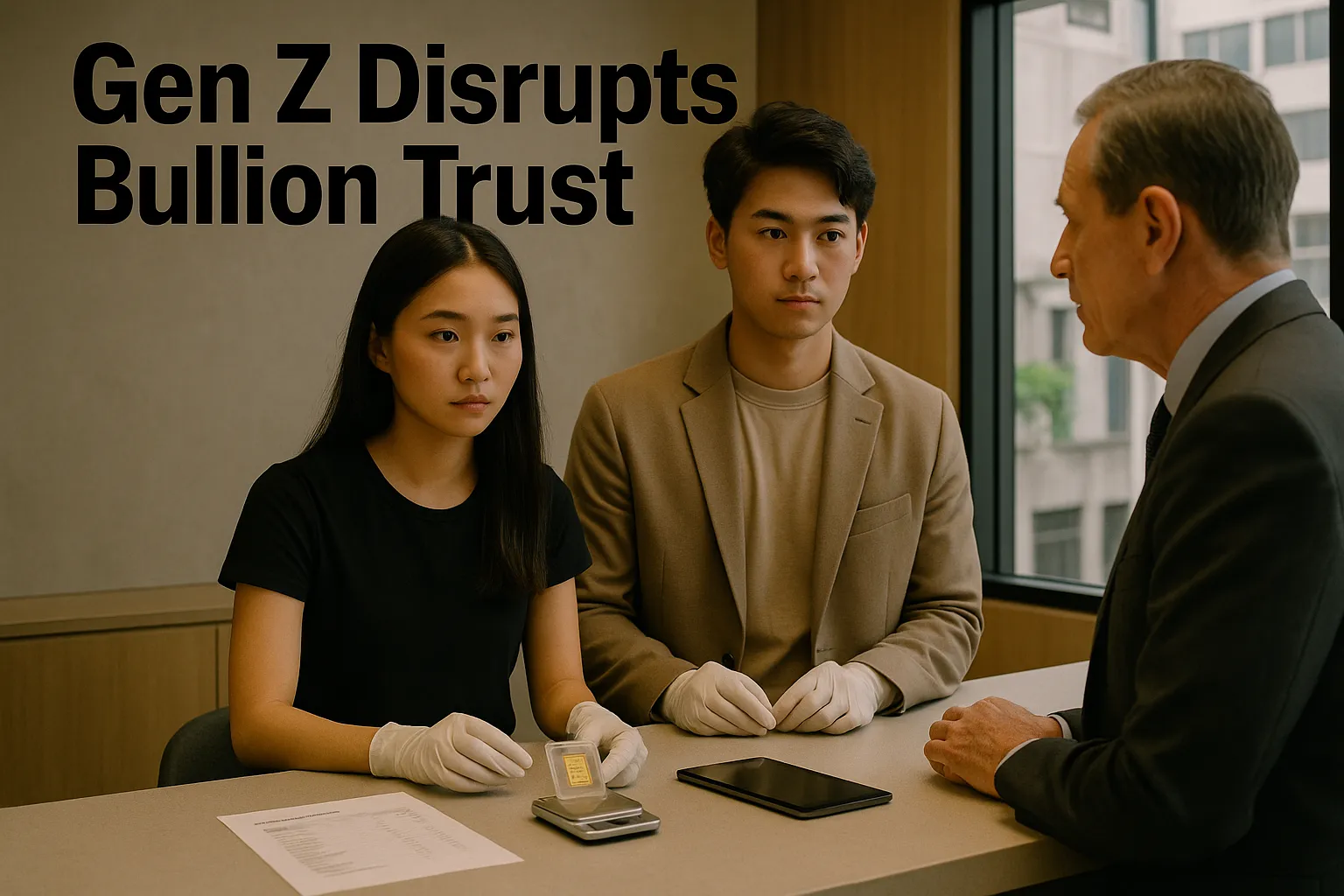
In the Singapore bullion market, the product is expensive, the buyer is cautious, and the decision is loaded with “what if I’m the one who gets it wrong?” That’s not unique to bullion—many Singapore legacy sectors sell high-ticket, regulated, or trust-sensitive products where customers feel intimidated and sellers hide behind jargon. The commercial opportunity for Gen Z founders isn’t “being young”; it’s designing a business that removes uncertainty faster than incumbents can. The practical challenge is execution: how do you turn transparency and education into a repeatable acquisition and conversion system—without over-claiming, giving financial advice, or relying on the comfort of “we’ve been around for decades”? This guide breaks down the mechanics and gives an implementable playbook.
Why do “trust-heavy” categories in Singapore still reward the most transparent operator, not the oldest one?
In Singapore, buyers in high-ticket and regulated-adjacent categories often behave the same way:
- They assume information asymmetry (the seller knows more).
- They fear embarrassment (asking “basic” questions in-store).
- They over-weight downside risk (getting scammed, overpaying, buying the wrong thing).
- They look for institutional signals (process, documentation, professionalism), not just charisma.
This creates a predictable market failure: incumbents can keep conversions high by keeping explanations vague, because the customer has already arrived “pre-committed” (word-of-mouth, location, habit). But that model weakens when:
- search and social put comparisons one click away
- reviews punish inconsistency
- younger buyers demand to understand the “why” before they show up
The business consequence
In these categories, the brand is not your logo—your brand is your explanation. Whoever explains pricing, process, and trade-offs most clearly tends to:
- reduce pre-sale friction (fewer drop-offs)
- increase close rates (less “I’ll think about it”)
- lower reliance on expensive footfall
- build referral loops (people share explanations, not slogans)
Transparency becomes a moat because it’s operational, not cosmetic. You can’t copy it quickly if your business model depends on opacity for margin or if your staff aren’t trained to explain consistently.
What’s the real commercial mechanism—how does transparency turn into distribution and conversion?
Transparency works when it changes buyer behaviour at three points: before they contact you, during comparison, and at the moment of payment.
1) Pre-contact: reduce intimidation so more people raise their hand
In bullion-style categories, many prospects never enquire because they don’t know what to ask. Education content and clear pricing frames give them language.
Commercial effect:
- higher enquiry volume from “non-traditional” buyers
- more qualified leads (they self-select based on your disclosed terms)
2) Comparison: make your offer easier to evaluate than competitors
If customers cannot compare apples-to-apples, they default to proxies: age of business, shopfront size, or who a friend used. Transparent operators win by making comparison simple.
Commercial effect:
- you become the reference point (“use their page to check price/spread/process”)
- less discount pressure (clarity reduces suspicion)
3) Checkout: reduce perceived risk at the last metre
At the payment moment, buyers in high-ticket categories ask:
- “Will I regret this?”
- “Can I undo this if something feels off?”
- “Will I be treated fairly if there’s an issue?”
Transparency—especially documented process and clear receipts—acts as risk insurance.
Commercial effect:
- higher conversion rate
- fewer disputes (because expectations were set)
- stronger repeat purchase behaviour (customers trust the process, not just today’s staff)
A practical test
If your best-performing channel is still “walk-in + salesperson,” you’re vulnerable. If your best-performing channel is “customer consumed the explanation before arriving,” you’re building a system.
How should you design pricing transparency without accidentally commoditising yourself?
Founders worry that publishing pricing (or spreads/fees) triggers a race to the bottom. In practice, most price-shopping happens anyway—your choice is whether the comparison happens with or without your framing.
What “pricing transparency” actually means in opaque categories
It doesn’t mean exposing every internal cost line. It means giving customers a complete decision model:
- what they will pay
- what influences the number (market movement, grading, urgency, quantity)
- what’s included (testing/verification, documentation, after-sales support)
- what’s not included (delivery, special handling, add-ons)
Use a three-layer pricing approach
Layer 1: Public anchor (simple, comparable)
- A live or frequently updated reference price, or a clear example table.
- A plain-English explanation of how you calculate the final price.
Layer 2: The spread / fee logic (explain the trade-offs)
- Why there is a buy/sell spread or service component.
- What the customer gets for it: speed, verification, guarantees of process, convenience, inventory availability.
Layer 3: The scenario calculator (reduce “gotcha” moments)
- Examples like: “If you buy X quantity at Y time, here’s how the number changes.”
- Show the sensitivity (what moves, what doesn’t).
Protect margin by competing on “total confidence,” not “lowest number”
Margin erosion happens when your value is unclear. In high-ticket purchases, customers often accept a higher price if the process is:
- consistent
- verifiable
- professionally documented
- low-friction
A useful internal rule: if you publish a price, publish the reason someone would still choose you at a slightly higher price.
Avoid two common errors
- False precision: quoting tight numbers without stating what can change and when.
- Hidden add-ons: transparency collapses if customers feel surprised at checkout.
What customer education content actually moves revenue in high-ticket Singapore categories?
“Education” isn’t blog-post volume. It’s decision support that shortens time-to-trust.
A practical way to plan content is to map the buyer’s private questions—the ones they won’t ask in-store.
Content that reduces fear (and increases enquiries)
- “How to avoid overpaying” frameworks (without implying others are cheating)
- “What to check before you buy/sell” checklists
- “Common myths” that cause expensive mistakes
Content that reduces embarrassment (and increases conversion)
- A glossary in plain English
- Short videos showing what happens at the counter
- Example receipts/invoices (redacted), so customers know what ‘normal’ documentation looks like
Content that reduces decision fatigue (and speeds up close)
- Comparison guides: option A vs option B (trade-offs, not verdicts)
- A “first-timer path”: what to prepare, what to bring, expected time needed
Make education measurable (so it doesn’t become “marketing theatre”)
Track these metrics as management KPIs:
- % of enquiries that mention a specific piece of content
- conversion rate of customers who viewed the process page/video vs those who didn’t
- time from first visit to transaction
- repeat rate within 90/180 days (where relevant)
The Singapore nuance: avoid talking down
Many buyers are financially literate but unfamiliar with category mechanics. Write to a smart reader who lacks context, not capability.
Practical publishing rhythm
If you can only do one cadence:
- 1 flagship “how pricing works” page (kept updated)
- 1 “process walkthrough” video (re-shot when process changes)
- 2–4 scenario explainers per month (based on real customer questions)
That will typically outperform a dozen generic posts.
How do you design an online-to-offline (O2O) journey that closes high-value deals without feeling pushy?
In Singapore, many high-ticket transactions still close offline because customers want “physical assurance.” The winning model is not online-only or offline-only—it’s digital pre-sell followed by a predictable in-person experience.
Think of O2O as a five-step funnel
1) Discover: customer sees a reel, search result, or shared link
- Objective: earn the click with a useful promise (pricing logic, process, checklist)
2) Understand: customer learns enough to ask a real question
- Objective: remove intimidation; clarify options and constraints
3) Commit: customer takes a low-friction step
- Examples: WhatsApp enquiry, appointment booking, “get a quote” form
- Objective: set expectations on timing, documents, and what will happen
4) Verify (in-store): customer watches the process
- Objective: make the verification visible, not mysterious
5) Document & follow-through: customer leaves with proof
- Objective: receipts, certificates, and a clear after-sales channel
Design principle: don’t make people repeat themselves
A common conversion killer is re-collecting information at every touchpoint.
Implement:
- an enquiry form/WhatsApp template that captures key details upfront
- a CRM note or ticketing system so staff can pick up context
- a consistent “first 60 seconds” script in-store: confirm needs, explain steps, disclose variables
Where O2O usually fails
- Digital promises, offline inconsistency: content says “transparent,” but staff don’t show workings.
- No appointment capacity planning: walk-ins collide with consultation-style transactions.
- Weak post-visit follow-up: customer goes home, compares, and disappears.
Operational fix: treat the store like a showroom + verification lab
You’re not just selling; you’re demonstrating competence. The physical environment is part of the trust asset:
- visible tools and steps (where appropriate)
- clear signage on process stages
- private space for sensitive conversations
This is how digital trust gets converted into offline commitment.

Which trust signals scale in Singapore without implying “regulation guarantees quality”?
In trust-sensitive categories, it’s tempting to over-leverage regulatory language. That’s risky and often counterproductive. The better approach is to build trust signals that are true, repeatable, and observable.
Use trust signals in four layers
Layer 1: Social proof (what customers experienced)
- verified reviews with specific detail (speed, clarity, documentation)
- “what happened” testimonials rather than “they’re the best”
Layer 2: Process proof (what you can show)
- step-by-step process pages
- short walkthrough videos
- sample documentation (redacted)
Layer 3: Operational proof (how you control quality)
- staff training standards and refreshers
- clear escalation process for disputes
- audit trail in your internal systems (who quoted, who approved, who processed)
Layer 4: Governance proof (how you keep yourself honest)
- independent verification where relevant (e.g., external audit of financials when required; third-party checks for specific claims)
- clear internal policies on conflicts, refunds, and corrections
What to avoid saying
- Avoid suggesting that being “regulated” or “registered” automatically means better pricing, honesty, or returns.
- Avoid making investment-like promises or implying future performance.
A practical trust-signal checklist (non-legal, operational)
- Can a customer see your pricing logic before visiting?
- Can a customer understand the verification steps in under 2 minutes?
- Do you provide documentation that a customer can show a family member?
- Can a customer reach you after the sale through a named channel?
Trust signals scale when they are baked into workflow, not added as marketing decoration.
What internal controls do you need when transparency increases volume and speed?
Transparency can be a growth lever—but growth exposes weak controls. In high-ticket environments, the risks are less about “paperwork” and more about operational integrity: quoting errors, inconsistent fees, staff shortcuts, and reputational damage.
Control points that matter (and why)
1) Quote governance
- Risk: different staff quote different numbers for the same scenario.
- Control: define who can override pricing, when, and how it’s documented.
2) Version control of public pricing pages
- Risk: outdated pricing logic stays live and triggers disputes.
- Control: named owner, update schedule, and archived versions.
3) Segregation of duties (even in small teams)
- Risk: one person quotes, collects payment, and completes documentation with no second check.
- Control: at least one secondary review for high-value thresholds (set internally based on your risk appetite).
4) Customer communication logs
- Risk: “he said / she said” disputes.
- Control: standard templates, CRM logging, confirmation messages.
5) Refunds and corrections process
- Risk: ad-hoc decisions that look unfair.
- Control: published principles (not promises), internal approval workflow.
Make controls compatible with speed
The goal is not bureaucracy. The goal is repeatability.
Implement controls as:
- checklists embedded into POS/CRM steps
- dropdown reasons for overrides
- auto-generated customer confirmations
If controls slow down every transaction, staff will route around them. If controls are integrated into the workflow, compliance becomes “how we work.”
Paul Hype Page & Co. often supports SMEs here as an implementation partner—helping teams document workflows, set approval limits, and design lightweight audit trails that stand up under customer scrutiny and internal review.
How do you train staff to deliver transparency consistently—without turning them into robots?
In trust-heavy categories, staff are the product interface. If transparency is only in the founder’s head (or only in the content), you don’t have a moat—you have a single point of failure.
Build “explainability” into frontline capability
Aim for three layers of staff mastery:
Layer 1: The 30-second explanation
- what we do
- how pricing works at a high level
- what happens next
Layer 2: The 2-minute walkthrough
- step-by-step process
- what can change the final price
- what documentation the customer will receive
Layer 3: The objection playbook (calm, not defensive)
- “Why is your price different from X?”
- “What if I change my mind?”
- “How do I know this is genuine / correct / fair?” (adapt for your category)
Tools that make training stick
- a one-page script guide with “must say” disclosures and “avoid saying” phrases
- role-play scenarios using real enquiries
- a shadowing checklist for new hires
- monthly calibration: review 5 recorded (or documented) customer interactions for consistency
Incentives matter
If staff are paid purely on speed or volume, transparency will suffer.
Consider balancing:
- sales outcomes
- customer satisfaction signals (review mentions of “explained clearly”)
- error/dispute rates
The founder’s job
Don’t just hire “good talkers.” Hire people who can teach. In high-ticket categories, the best closers are often the best educators.
How can you apply this playbook beyond bullion—especially in other opaque Singapore industries?
Bullion is just a visible example of a broader Singapore pattern: categories where customers feel they need insider knowledge to transact.
Common examples include:
- specialist healthcare and elective procedures (high anxiety, high spend)
- renovation and interior works (opaque scope, variation orders)
- private education and enrichment (outcomes hard to measure)
- insurance-adjacent professional services (complex terms, long tail disputes)
- B2B industrial supply and maintenance (pricing varies, urgency premiums)
The “Opaque Industry Transparency Playbook”
Use this 8-part management checklist.
1) Publish your decision model
- What are the variables? What’s fixed vs flexible?
2) Surface trade-offs honestly
- When is your option not ideal?
3) Create a first-timer pathway
- What to prepare, what to expect, common mistakes.
4) Make the process observable
- Photos, walkthroughs, checklists, milestones.
5) Put guardrails around quotes and scope
- Define change-control and approvals.
6) Design O2O handoffs
- Customer shouldn’t re-explain needs at every step.
7) Turn documentation into customer confidence
- Clear invoices, acceptance forms, and aftercare instructions.
8) Measure trust, not just leads
- Dispute rate, refund rate, review sentiment, repeat rate, referral rate.
A realistic implementation sequence (30–60–90 days)
First 30 days:
- build one pricing/process “source of truth” page
- standardise enquiry templates and staff scripts
Next 30 days:
- implement quote governance and override logging
- publish 6–10 content pieces that answer real buyer questions
Next 30 days:
- tighten O2O handoffs (CRM notes, appointment capacity)
- start monthly calibration on customer interactions
This is how you shift from “founder-led trust” to “system-led trust.”
Conclusion
Singapore’s trust-heavy, high-ticket categories don’t just reward reputation—they reward reduced uncertainty. The most credible disruptors aren’t the loudest; they’re the clearest: they show pricing logic, explain trade-offs, make the process observable, and design an O2O journey that lets customers feel informed rather than intimidated. If your industry is opaque, your risk isn’t that a competitor will undercut you—it’s that someone will teach your customer how to evaluate you, then win the comparison.
Your next step is operational: pick one customer journey, publish a complete decision model (pricing + process), standardise staff explanations, and add lightweight controls so transparency stays consistent as volume grows. If you want implementation support—workflow documentation, quote governance, and scalable trust controls—Paul Hype Page & Co. can help you turn “being transparent” into a repeatable commercial system.
FAQs
It means your explanations of pricing, process, and trade-offs become the thing people share and use to compare options, driving enquiries and conversions before a customer even walks in.
Content that answers private buyer questions: checklists to avoid mistakes, plain-English glossaries, walkthroughs of what happens in-store, and scenario examples that show how pricing changes and what stays fixed.
Not if you publish a complete decision model—what affects the final price, what’s included, what’s not, and why your process is worth paying for—so customers compare on total confidence, not just the lowest number.
Pre-sell with clear pricing and process pages, offer a low-friction commitment step (WhatsApp/booking/quote), make verification observable in-person, and send customers home with clear documentation and a follow-up channel.
Define quote governance and overrides, keep version control for public pricing pages, separate key duties where possible, log customer communications, and use a consistent refunds/corrections workflow that’s embedded into POS/CRM steps.
Share This Story, Choose Your Platform!
Related Business Articles