Singapore Legal & Company Secretary Guides





Guides
Singapore private companies generally need an annual audit unless a clear exemption applies, such as the small company, small group, or (in narrower cases) dormant company pathway. This guide gives directors a practical yes/no framework and explains what you still must prepare, plus what to verify with ACRA before skipping an audit.
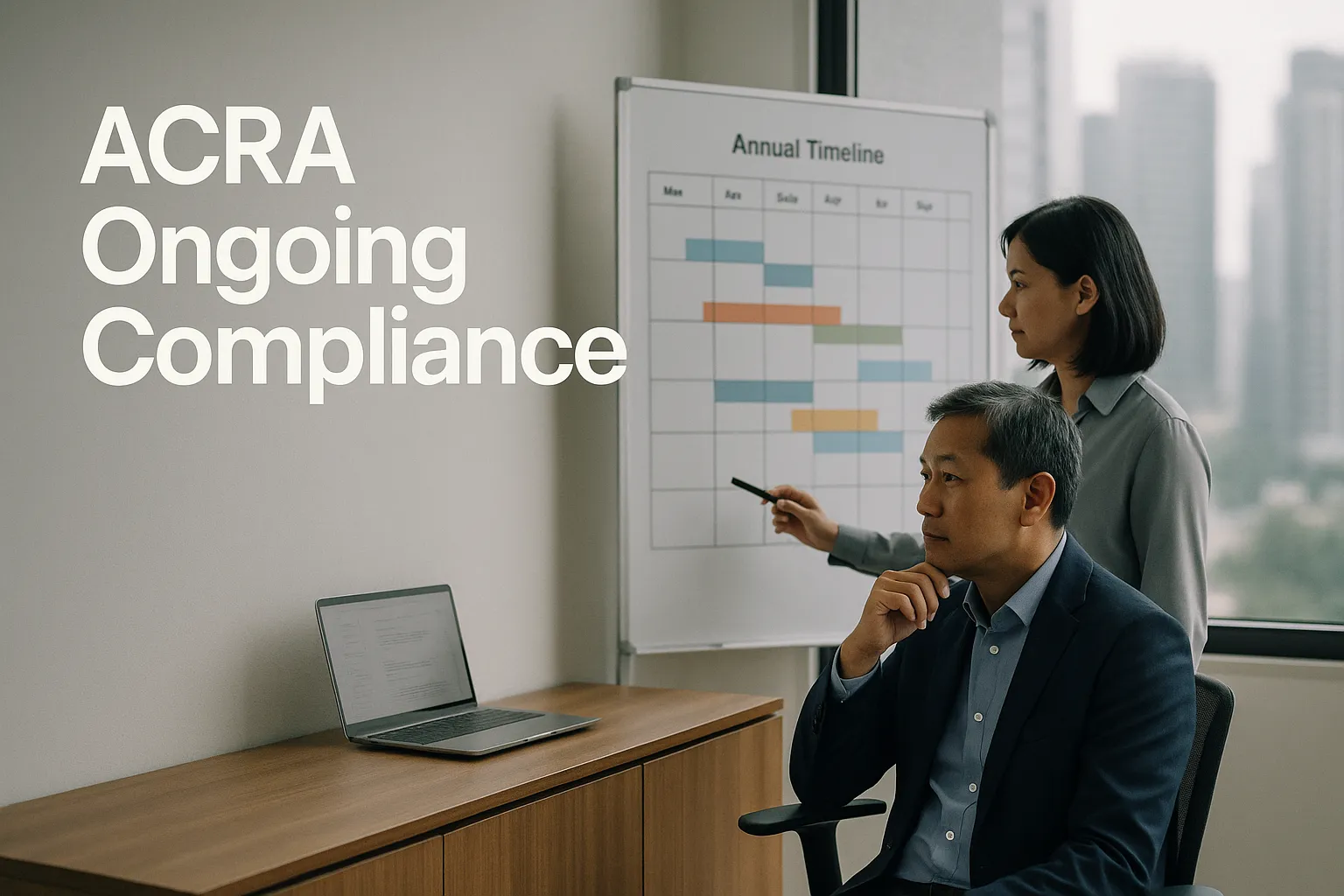
ACRA compliance often breaks down when year-end tasks depend on memory and handoffs between finance, directors, and the corporate secretary. This guide turns the core obligations—records, financial statements, AGM pathways, annual return filing, and event-driven updates—into a repeatable annual workflow with clear owners and checkpoints.

Many Singapore companies file late because the annual return due date depends on how the AGM is handled, the financial year end, and the company’s type. This guide shows how to map the correct deadline, prepare what BizFile needs, assign ownership, and recover quickly if you’re already overdue.

Many founders miss the 6-month deadline to appoint a Singapore company secretary or accidentally create a vacancy during a handover, which can lead to avoidable ACRA issues. This guide explains the key deadlines, who is eligible (and who is not), the sole-director restriction, and simple operating controls to keep filings and records in sync as the business changes.

Hard-sell sales systems can turn “closed revenue” into refunds, disputes, and reputational drag—especially in Singapore’s small, fast-moving market. This guide gives founders a practical control framework across scripts, informed consent evidence, package design, incentives, and complaint dashboards to reduce future liability without slowing growth.
The MAS Macroeconomic Review 2026 signals moderate growth but higher volatility risks—so SMEs should plan with ranges, not single-point forecasts. Use it to tighten cashflow routines, strengthen accounting and tax documentation, manage payroll costs compliantly, and structure market expansion for 2026–2027.

Budget 2026 Singapore updates to foreign worker levies and Employment Pass salary benchmarks can raise all-in manpower cost, complicate renewals, and reshape SME hiring plans even if headcount stays flat. Learn how to model scenarios, protect compliance, and align payroll, pass strategy, and productivity plans ahead of the two-tier levy shift signalled for 2028.

Integrating the IIA’s updated Internal Audit Standards with Singapore’s National Risk Assessment (NRA) creates a powerful framework for businesses to enhance their risk management and governance practices. This integration ensures compliance with both global best practices and local regulatory requirements, boosting credibility and investor confidence.

The Monetary Authority of Singapore (MAS) has introduced comprehensive updates to its AML/CFT framework, tightening compliance standards across financial institutions and Corporate Service Providers (CSPs). These reforms aim to strengthen transparency, accountability, and risk management — reinforcing Singapore’s position as a trusted global financial hub.
Singapore Company Secretary Video Guides

All About Opening Company Bank Account in Singapore
Company Secretarial Services Singapore