




Guides

Most Singapore companies should plan to file a corporate income tax return each Year of Assessment unless IRAS has explicitly waived filing for that YA. This guide shows how to verify waiver status in myTax Portal or IRAS correspondence, choose the right form at a high level (C‑S Lite/C‑S/C), and keep audit-ready records even when dormant.

This guide explains the commonly referenced YA 2026 corporate income tax return filing deadline in Singapore and why filing is still required unless IRAS has granted an approved waiver. It also sets out a practical risk-and-controls framework to avoid late filing, including director accountability, separating IRAS and ACRA timelines, and what IRAS may do if a return is late.
For Singapore cross-border related-party transactions, the key practical issue is knowing what is binding law versus IRAS audit expectation. This guide explains how the Income Tax Act gives IRAS its adjustment and enquiry powers, while the Transfer Pricing Guidelines set out how to support arm’s length outcomes with methods, documentation, and controls.
Many Singapore SMEs adopt AI through scattered tools that are hard to measure and even harder to substantiate when incentives are reviewed. This guide shows founders and CFOs how to scope AI into a governed programme with baselines, KPIs, cost coding, vendor deliverables, and an audit-ready documentation pack.
Even if your Singapore company is dormant, has “No Business Done”, or is making a loss, IRAS may still require ECI and/or an annual corporate income tax return for the relevant YA. This guide gives a practical yes/no workflow to check myTax Portal and IRAS notices, confirm whether a waiver or simplified dormant filing applies, and document your decision each year.

Singapore withholding tax can apply to specific IRAS-listed income types paid to non-residents, and the payer is responsible for classifying, filing, and paying IRAS on time. This guide gives finance teams a practical end-to-end workflow to screen invoices, confirm source and treaty position, apply the right rate, and document decisions for mixed or unclear payments.
Singapore withholding tax is triggered by specific IRAS income types and by when amounts are paid or credited to a non-resident, not simply because a vendor is overseas. This guide shows finance teams how to classify payments, confirm non-resident status, apply treaty evidence where relevant, file the right IRAS form, pay by the statutory deadline, and retain an audit-ready evidence pack.
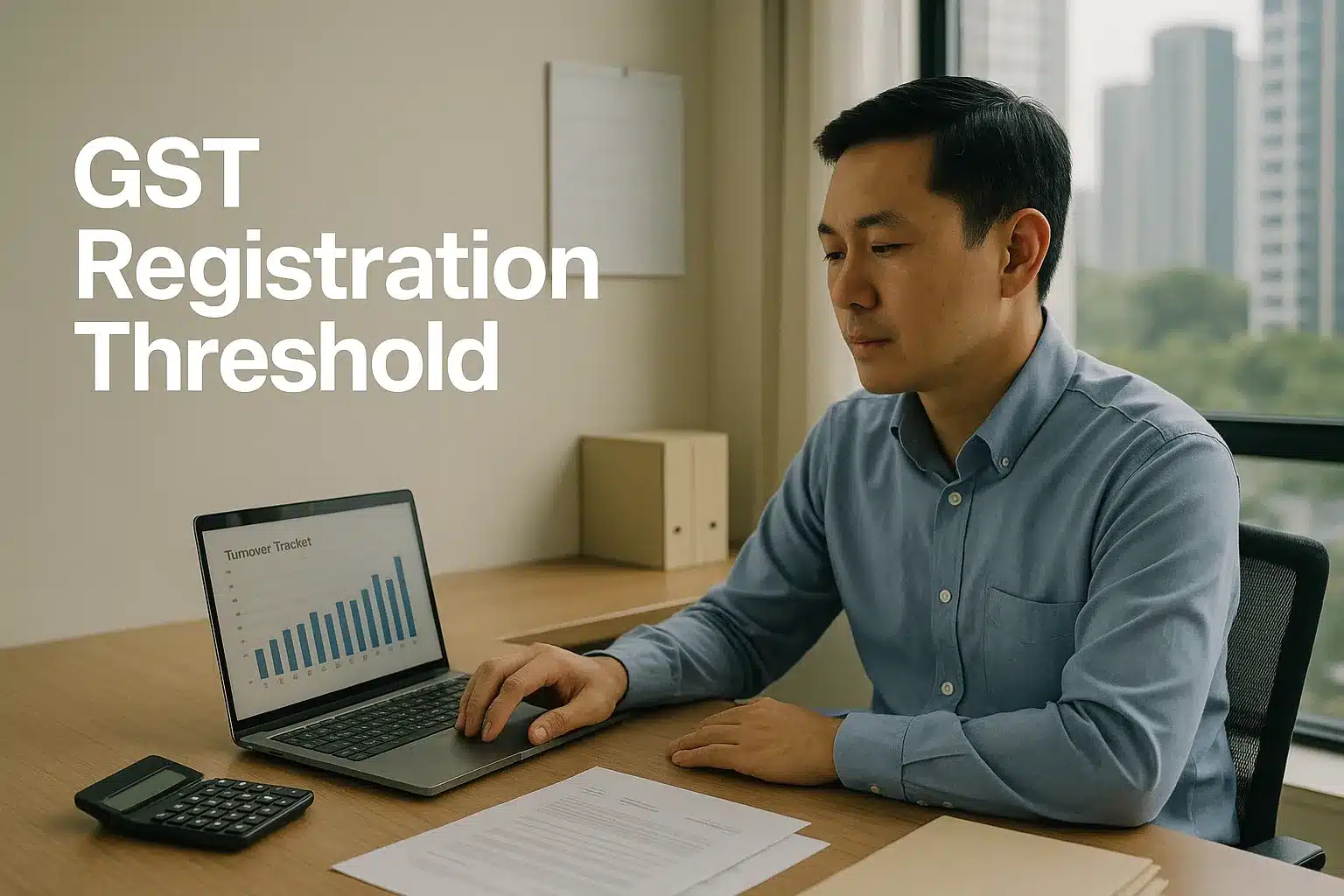
GST registration in Singapore is self-assessed, so growing businesses need a repeatable way to monitor taxable turnover across channels and avoid crossing the S$1 million threshold without realising. This guide shows a practical workflow for running the retrospective and prospective tests, documenting “reasonable expectation” decisions, and setting triggers so registration is handled on time.

Singapore companies must plan for two linked timelines: ECI is generally due within 3 months of financial year-end, and the annual corporate income tax return is e-filed by 30 November of the relevant Year of Assessment. This guide shows how to run both as one workflow with internal cut-offs, clear ownership, a tax-ready close pack, and early checks for waiver and form type so filing doesn’t become a November scramble.
Singapore Tax Video Guides

Corporate Tax in Singapore
Singapore Income Tax